
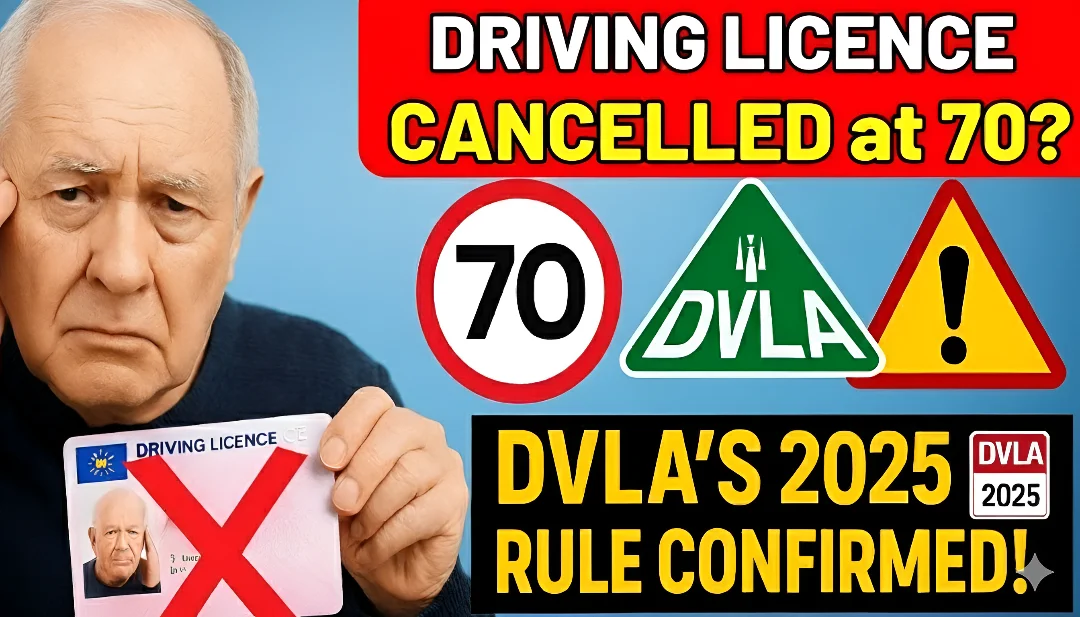
Senior Driving License Rules 2026: Debunking the Myth of Automatic Cancellation at 70
Reaching the age of 70 is a milestone that often comes with questions about independence—specifically, the freedom to drive. For years, a persistent myth has circulated that turning 70 means your driving license is automatically cancelled or revoked.
Let’s set the record straight immediately: In the United States, no state motor vehicle department (DMV) automatically cancels a driver’s license simply because you have turned 70. However, the rules do change. They shift toward ensuring that every senior driver remains medically fit to handle a vehicle safely.
This guide breaks down what drivers over 70 must know about license renewal, medical declarations, eyesight standards, and how to navigate the system with confidence.
Is Your License Automatically Revoked When You Turn 70?
Absolutely not. This is the biggest misconception among senior drivers.
While it’s true that you cannot simply hold onto your license indefinitely, it is not “cancelled” on your 70th birthday. Instead, the renewal process becomes more frequent and requires a greater degree of personal accountability.
Think of it less as a penalty and more as a safety checkpoint. The goal is to balance the independence of senior citizens with the safety of everyone on the road.
Why Do Driving Rules Become Stricter After 70?
The reason isn’t ageism—it’s biology. As we age, certain physical and cognitive changes can impact driving ability, including:
- Vision Deterioration: Conditions like cataracts, glaucoma, or macular degeneration become more common.
- Slower Reaction Times: The time it takes to process a hazard and hit the brake can increase.
- Chronic Medical Conditions: Issues like heart disease, diabetes, or arthritis can affect control and focus.
States implement stricter checks to catch these issues early, ensuring that healthy seniors can drive freely while those with untreated conditions receive the medical attention they need.
License Renewal Rules for Drivers Over 70 in the US
Unlike younger drivers who might renew their license every 6 to 8 years, drivers over 70 typically face a shorter renewal cycle.
While rules vary by state, most require renewal every 2 to 5 years once you reach a certain age (usually 65 or 70). The renewal process often includes:
- In-Person Renewal: Many states waive in-person visits for younger drivers but require seniors to appear at a DMV office.
- Vision Test: A standard, mandatory eyesight screening.
- Written Test (in some states): A few states require a written knowledge test to ensure familiarity with new traffic laws.
Important: These renewals are not “driving tests.” You generally do not need to retake a road test unless there is a specific medical concern reported to the DMV.
Medical Conditions That Must Be Reported
Your health and your driving are directly linked. When renewing a license after 70, you will be required to sign a medical declaration. Being dishonest on this form can lead to severe penalties, including fines or license suspension.
You must typically report conditions such as:
- Neurological Disorders: Epilepsy/seizures, Parkinson’s disease, dementia, or Alzheimer’s.
- Cardiovascular Issues: Heart conditions, fainting spells, or stroke history.
- Vision Problems: Conditions that cannot be corrected to 20/40 with glasses or contacts.
- Uncontrolled Diabetes: Especially if it involves episodes of hypoglycemia (low blood sugar) that could cause loss of consciousness.
The Good News: Declaring a condition does not automatically mean losing your license. It simply allows the DMV to assess your situation. In many cases, you may be issued a restricted license (e.g., allowed to drive only during daylight hours) or asked to provide a doctor’s note clearing you for driving.
The Critical Eyesight Standard
Good vision is non-negotiable for safe driving. While the standard “number plate test” (reading a plate from 20 meters) is a UK rule, the US equivalent is the Snellen Eye Chart.
Generally, you need 20/40 vision or better in at least one eye (with or without corrective lenses) to drive without restrictions.
Advice for Seniors:
- Get Annual Eye Exams: Don’t wait for your renewal notice. See an optometrist yearly.
- Update Your Glasses: Ensure your prescription is current. Driving with old, scratched lenses is dangerous.
- Manage Glare: Night driving often becomes harder with age due to glare sensitivity. Be honest with yourself about your night vision capabilities.
Do Drivers Over 70 Need to Take a Driving Test?
In most cases, no.
There is no federal or state law that mandates a behind-the-wheel road test for everyone over 70. However, if during your renewal (vision test or medical review) a DMV officer observes something concerning—or if a physician or family member files a report expressing safety concerns—the DMV has the authority to require a driver’s license examination (road test).
This is rare but possible, and it is designed to assess actual driving ability, not to punish the driver.
What Happens If You Don’t Renew on Time?
This is where legal trouble begins. If you fail to renew your license before the expiration date:
- Your License Becomes Invalid: You are legally driving without a valid license.
- You Face Fines: Driving with an expired license can result in traffic tickets and fines (amounts vary by state).
- Your Insurance is at Risk: If you get into an accident with an expired license, your car insurance company may deny your claim, leaving you liable for thousands of dollars in damages.
How to Renew Your License After 70
The process is designed to be accessible. Here’s how to handle it:
- Check Your Renewal Notice: Your state DMV will mail you a notice before your license expires. Read it carefully.
- Choose Your Method:
- Online: Some states allow limited online renewal for seniors if you have a clean record. Check your state’s DMV website.
- By Mail: Some jurisdictions allow mail-in renewal for seniors over a certain age.
- In-Person: This is often the safest bet. Visit your local DMV office, bring the required documents (proof of identity, residency), and complete the vision test on the spot.
- Be Honest: Fill out the medical questionnaire truthfully.
- Pay the Fee: Renewal fees for seniors are sometimes reduced or waived depending on the state.
What Family Members Should Know
If you have an aging parent who drives, your role is crucial.
- Look for Warning Signs: Dents on the car, getting lost on familiar routes, or difficulty parking can indicate declining skills.
- Encourage Dialogue: Talk openly about driving. Frame it as “keeping you safe” rather than “taking away your keys.”
- Help with Renewal: Sit with them and help them navigate the online DMV portal or organize their documents for an in-person visit.
- Know Alternative Transport: Research local senior shuttle services, public transport concessions, or ride-sharing programs. Having a backup plan reduces the stress of possibly giving up driving later.
Common Myths vs. Facts
- Myth: “I have to retake my entire driving test at 70.”
- Fact: False. You only need to pass vision and sometimes written tests, not a road test.
- Myth: “If I tell them about my diabetes, they will take my license.”
- Fact: Not necessarily. If your condition is well-managed and controlled, you will likely keep your license.
- Myth: “My license is valid forever once renewed.”
- Fact: No. After 70, renewals are usually required every 2 to 5 years.
Key Takeaways for Drivers Over 70
- Your license is NOT automatically cancelled at 70.
- Renewal is mandatory more frequently (usually every 2-5 years).
- Medical honesty is required. Hiding conditions can lead to bigger problems than declaring them.
- Vision tests are mandatory. Keep your eyes checked annually.
- Stay proactive. Don’t wait for the DMV to catch up with you. If you notice changes in your health or driving ability, self-assess and consult your doctor.
Conclusion
The golden years should be about enjoying freedom, not worrying about losing it. The rules for senior drivers in the US are not designed to push you off the road; they are designed to keep you on it safely. By staying on top of your health, renewing your license on time, and communicating openly with your family and doctor, you can continue to drive legally, confidently, and safely well past 70.
Stay informed, stay safe, and enjoy the drive.